
Expanding Experiential STEM Learning in Public Schools is Critical in Transforming Africa’s Demographic Pressure into Skilled Talent
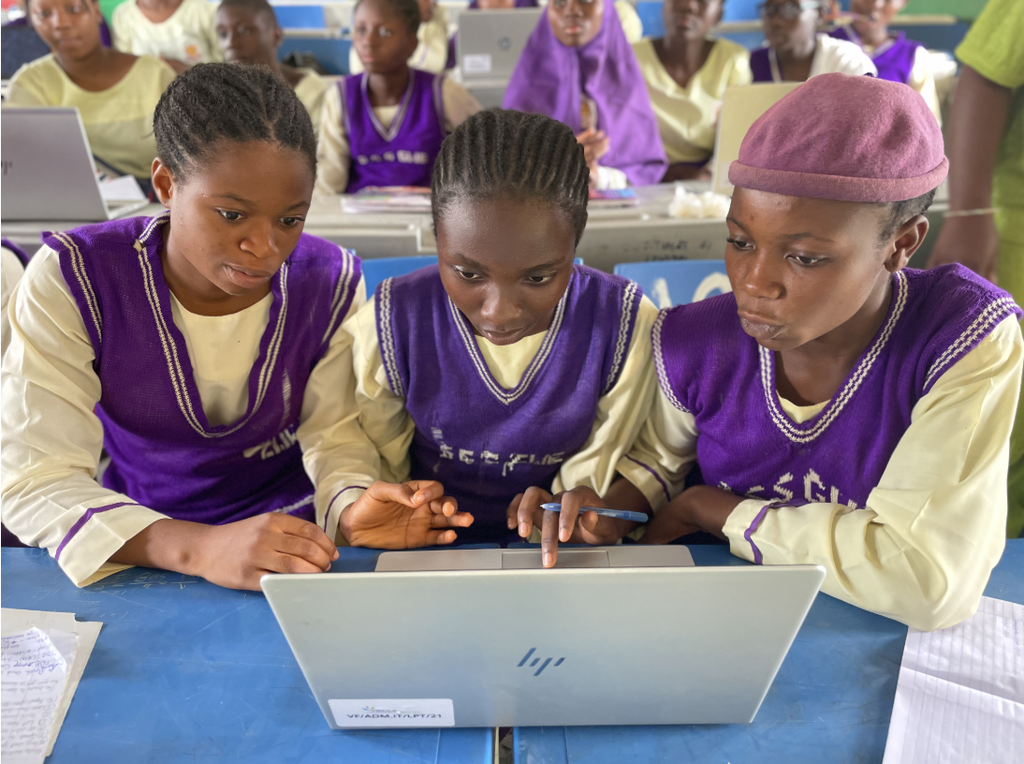
Experiential, hands-on STEM learning produces measurable academic gains. A 2025 meta-analysis in Frontiers in Psychology, synthesizing 66 experimental and quasi-experimental studies conducted between 2000 and 2024, found that STEM education has a moderate positive effect on student learning outcomes overall and its most significant impact on cognitive ability appears at the high school level, with a combined effect size of 0.58. Labor market data reinforces why this matters. The World Economic Forum’s 2025 Future of Jobs Report found that on average, workers can expect two-fifths of their existing skill sets to be transformed or become outdated by 2030, and identified broadening digital access as the most transformative trend shaping global labor markets, with employers expecting AI and information processing skills to grow in importance faster than any other skill category.
Across much of Africa, public primary and secondary schools still lack the laboratories and equipment needed to deliver this kind of practical instruction. In Rwanda, government data cited in a peer-reviewed education study shows that science equipment is scarce, with only 242 of 1,502 secondary schools, or 17%, having a science laboratory. In Uganda, a 2026 review of the Auditor General’s findings across 157 local governments reported that 136 schools lack science laboratories entirely, while another 270 have laboratories that are poorly equipped. When students move through their school years encountering scientific and technical concepts only in theory, they graduate without the applied problem solving experience, confidence, and technical fluency that employers now require. This gap compounds over time, since a student who never runs a real experiment, builds a working circuit, or writes a line of code in school enters the labor market unprepared for the fastest growing digital and technical roles, placing her longer term employment and earning prospects at serious risk before her career has even started.
The scale of the opportunity in front of Africa makes closing this gap urgent. The International Labour Organization reports that more than 72 million young people across Africa are neither employed nor in education or training, and two-thirds of them are young women. Africa’s youth population continues to grow rapidly at the same moment that digital and technical competency is becoming the entry requirement for a growing share of jobs worldwide. Expanding experiential STEM learning in African public schools is one of the clearest and most direct levers available for turning this demographic pressure into a source of skilled talent, higher household income, and long term economic growth for the continent.
The Visiola Foundation’s programs sit directly inside this opportunity. Our After-School STEM Clubs for Girls (ASCG) program brings robotics, engineering, and computer programming into government secondary schools that would otherwise have little or no access to practical instruction, and the Foundation’s own 2025 academic impact assessment of 498 participants found that average GPA rose from 3.42 to 3.60 over the program period, with 77% of participants reaching the Good to Excellent performance range. Its Coding Boot Camps carry this same experiential model into direct job readiness, and recent cohorts show 87% of graduates moving into full-time or part-time employment, freelance work, or further education. For the more than 24,000 girls and young women that the Foundation has trained since 2014, this work is the difference between finishing school with theory alone and entering adulthood with a working command of coding, robotics, and digital tools that connect directly to the jobs Africa’s economy is creating.
This quarter, we expanded the After-School STEM Clubs for Girls (ASCG) program to 10 additional Government Secondary Schools, bringing the number of schools served in 2026 to 45 and teaching 1,967 additional girls. This past quarter, our students benefitted from our experiential learning in mobile app development and robotics, which taught them technical skills and which helped them see themselves as innovators, engineers, and problem-solvers.
One of the moments that stayed with me this quarter was watching a group of fifteen-year-old ASCG participants take the national stage at the Obasanjo Space Centre. Competing as members of their school team alongside students from 18 other schools across Nigeria, they earned third place in the Robotics for Good Youth Challenge. We feel inspired by them because not long before joining the ASCG program, these girls had never written a line of code or assembled a robotic model. However, through consistent hands-on learning, mentorship, and practical STEM experiences, they developed the skills, confidence, and resilience to contribute meaningfully to their team’s success on a national stage.
This quarter also marked another significant milestone. Students participating in the ASCG program contributed to their school team’s first-place finish at the 2026 ExxonMobil STEM Africa Competition, demonstrating the practical application of the knowledge and skills they had acquired through the program. Beyond these competition successes, one of our ASCG participants, Raihan, achieved an outstanding score of 334 (out of 400) in the 2026 Unified Tertiary Matriculation Exam (UTME), placing her among the highest-performing candidates in all of Nigeria.
These accomplishments reflect the long-term impact of our sustained investment in high quality STEM education, mentorship, and opportunities that enable girls to realise their potential and excel wherever they are given the chance.
Thank you for standing with us. Your partnership makes every classroom, every competition, and every breakthrough possible.
We are also pleased to announce our intentional search for a visionary and experienced CEO to lead the Visiola Foundation in its next growth phase. We have included the job description in this e-newsletter and welcome applications from qualified applicants.
With warmth and gratitude,
Ladé
Scaling Impact: The Visiola Foundation STEM Clubs Train 1,967 More Girls in the FCT
This quarter marked a significant milestone for the Visiola Foundation’s After-School STEM Clubs for Girls as the program expanded to an additional 10 Government Secondary Schools across the Federal Capital Territory (FCT), bringing the total number of participating schools to 45. Through this expansion, 1,967 additional girls gained access to transformative STEM learning opportunities designed to equip them with the skills, confidence, and mindset needed to thrive in an increasingly technology-driven world.
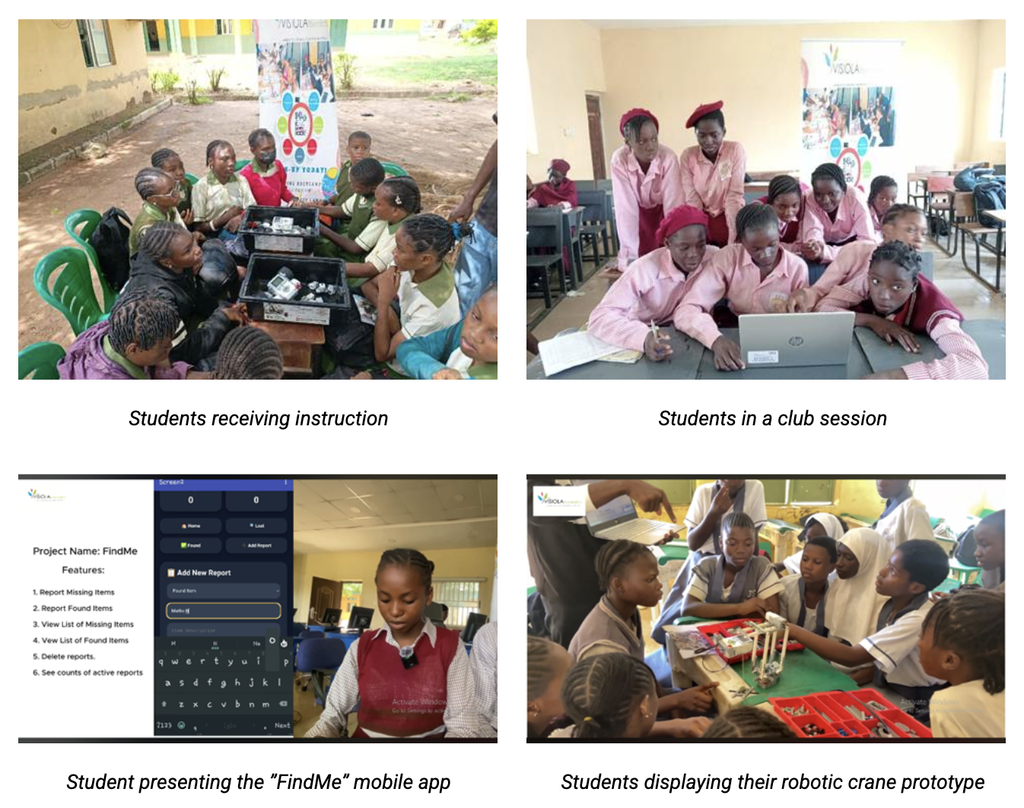
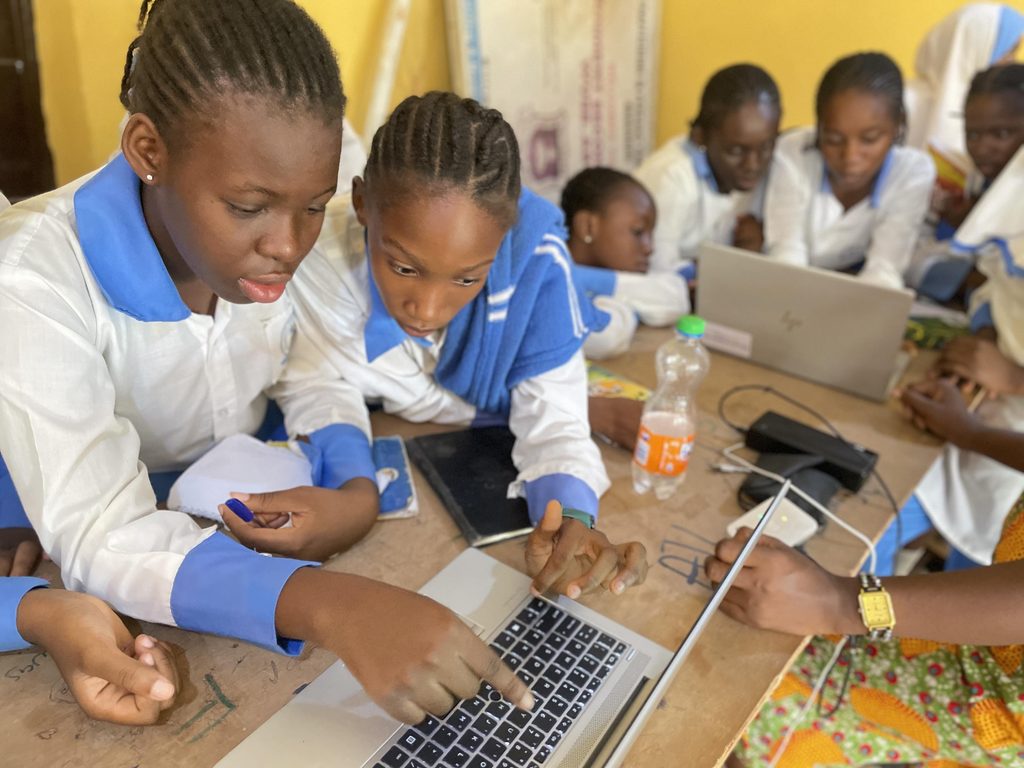
The second phase of the 2026 ASCG Program ran from April to June and was focused on mobile application development and robotics. Students were introduced to the fundamentals of designing and building mobile apps, enabling them to create digital solutions that address real-life challenges within their communities. As part of their hands-on learning experience, students worked on practical projects that allowed them to apply these newly acquired skills. Several participants designed mobile applications, such as a “Find Me” app, an exam preparation app, study planners, and organizational tools, to help fellow students manage their academics more effectively. In the robotics sessions, students assembled and programmed robotic prototypes such as cranes and a drawing robot, gaining firsthand experience in engineering design, logical thinking, and problem-solving. These projects provided valuable opportunities for creativity, teamwork, and innovation while demonstrating the girls’ growing confidence in STEM. They also explored the exciting world of robotics, gaining practical exposure to concepts that foster innovation, critical thinking, and problem-solving skills.
The enthusiasm displayed by the students throughout the program reflects their growing interest in STEM and reinforces the importance of creating inclusive pathways into science, technology, engineering, and mathematics.
ASCG Students’ Achievements: 3rd Place in National Robotics Hackathon
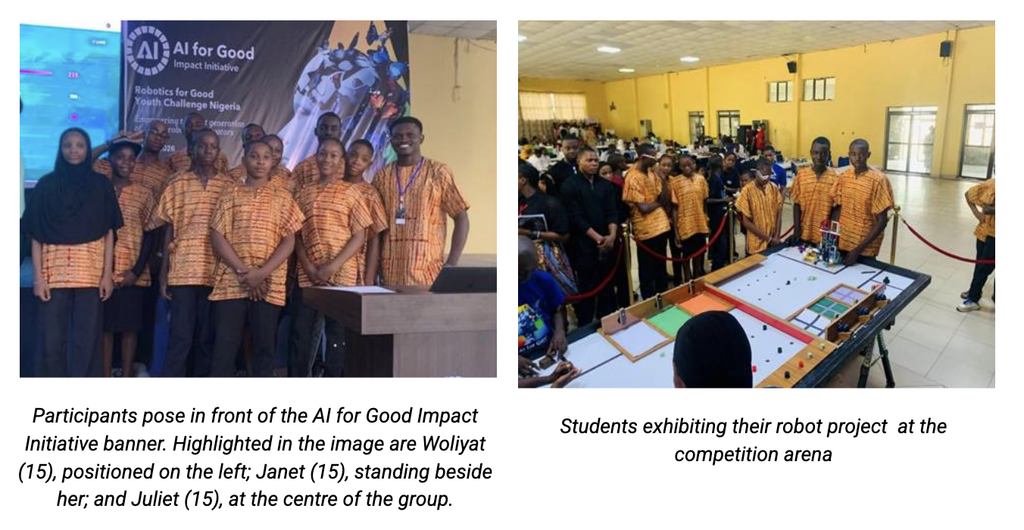
A remarkable highlight of this quarter was the outstanding performance of ASCG students in the Robotics for Good Youth Challenge Nigeria 2026, organised by the AI for Good Impact Initiative. Held in May at the Obasanjo Space Centre, the national competition brought together 19 secondary schools from across Nigeria to design innovative robotic solutions addressing food scarcity and hunger.
Three ASCG students, Woliyat (16), Janet (15), and Juliet (15), competed as members of their respective school teams. Leveraging the technical knowledge, problem-solving skills, and confidence gained through the ASCG, they contributed significantly to the design and development of a functional robotic solution addressing real-world challenges in food systems and sustainability.
Their team’s creativity, collaboration, technical competence, and presentation earned a commendable 3rd place finish in a highly competitive national challenge, demonstrating how sustained, hands-on STEM learning can equip girls to excel beyond the classroom.
While the achievement belongs to the students and their school, it also reflects the value of the ASCG program in strengthening participants’ technical capabilities and preparing them to compete successfully in STEM competitions. It further highlights the program’s role in developing confident young innovators who are able to apply their learning to solve real-world problems. This further highlights the success of the Visiola Foundation’s 360-degree Developmental Learning approach, which develops “the whole person” with improved self-confidence and self-esteem to critical thinking, problem-solving, leadership development, team work, and public speaking.
This milestone also reinforces the Visiola Foundation’s commitment to expanding access to high quality STEM education, mentorship, and experiential learning opportunities that enable more girls to thrive and contribute meaningfully wherever opportunities arise.
UTME Academic Achievement: Top Marks Nationally
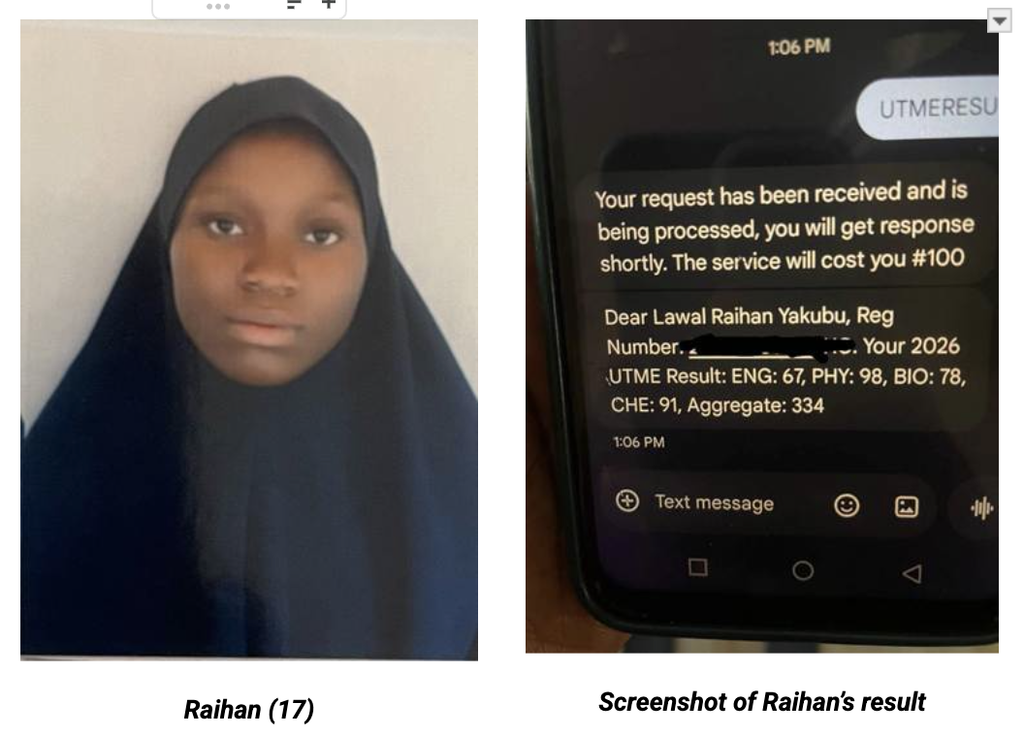
Raihan (17), an ASCG student emerged as one of the best performing students in Nigeria.
Raihan achieved an impressive score of 334 (out of 400) in the 2026 Unified Tertiary Matriculation Examination (UTME), administered by the Joint Admissions and Matriculation Board. This result places her among high-performing candidates nationwide and reflects her strong academic discipline, focus, and commitment to excellence.
Her achievement also underscores the broader impact of the ASCG program, which not only builds practical STEM skills through hands-on learning but also strengthens students’ confidence, study habits, and academic performance across core subjects.
Raihan’s success serves as an inspiring example of what is possible when girls are provided with consistent academic support, mentorship, and exposure to STEM learning opportunities. It reinforces the importance of investing in girls’ education as a pathway to nurturing future leaders, innovators, and professionals in the science and technology fields.
ASCG Students Win 1st Place at 2026 ExxonMobil STEM Africa Competition
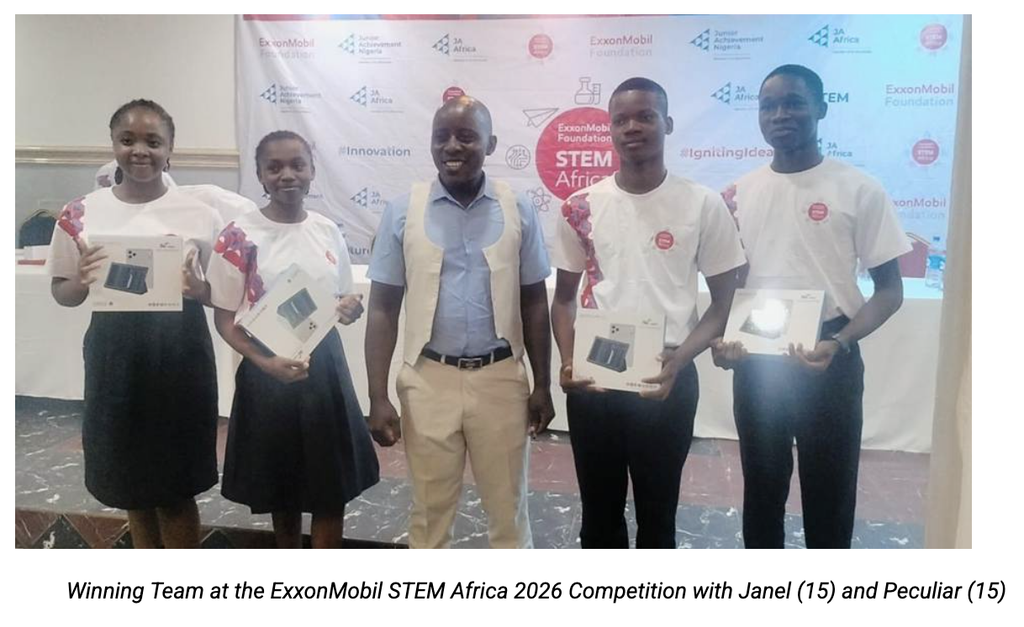
ASCG students performed remarkably well at the STEM Africa 2026 Competition, organized by the ExxonMobil Foundation on 11 June 2026. Our students applied the technical knowledge, creativity, and problem-solving skills they had developed through the ASCG, which played a key role in them securing 1st place at the national competition.
Among the ASCG participants were Janel (15) and Peculiar (15), whose teamwork, innovation, and technical competence contributed to their team’s outstanding performance. Their success demonstrates the value of sustained, hands-on STEM education in preparing girls to excel in competitive, real-world environments.
In recognition of their achievement, each student received a SORAPAD S802 tablet to support their continued learning and digital engagement.
While the achievement belongs to the students and their school, it also reflects the impact of the ASCG program in strengthening participants’ technical skills, confidence, and readiness to succeed in STEM competitions.
2026 Coding Boot Camp for Young Women – Cohort 1
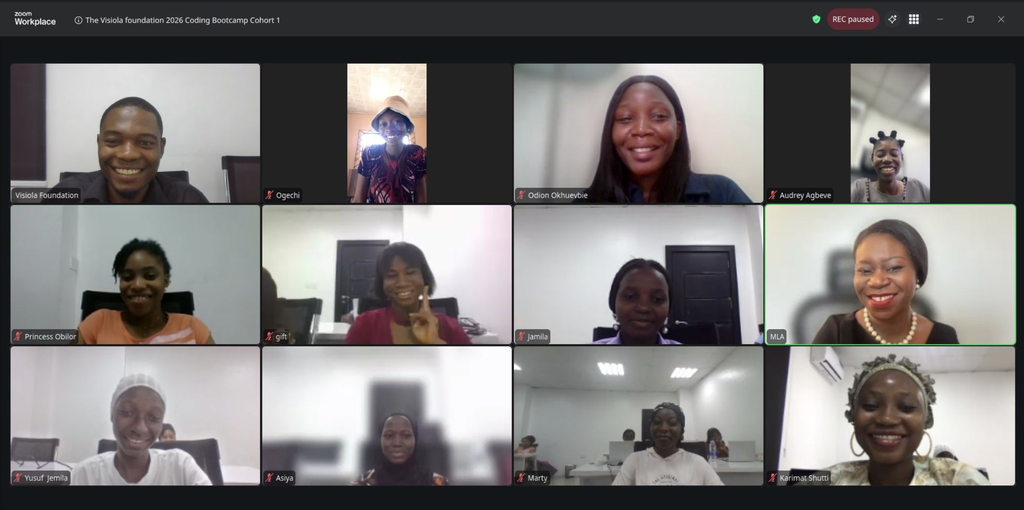
The 2026 Coding Boot Camp (CBC) Cohort 1 was delivered over a 12-week period under the AI-Assisted Full-Stack Web Development track, providing participants with practical training in modern web development and AI-assisted software development workflows. The program attracted applicants from multiple African countries, reflecting growing regional demand for accessible, industry-relevant digital skills training.
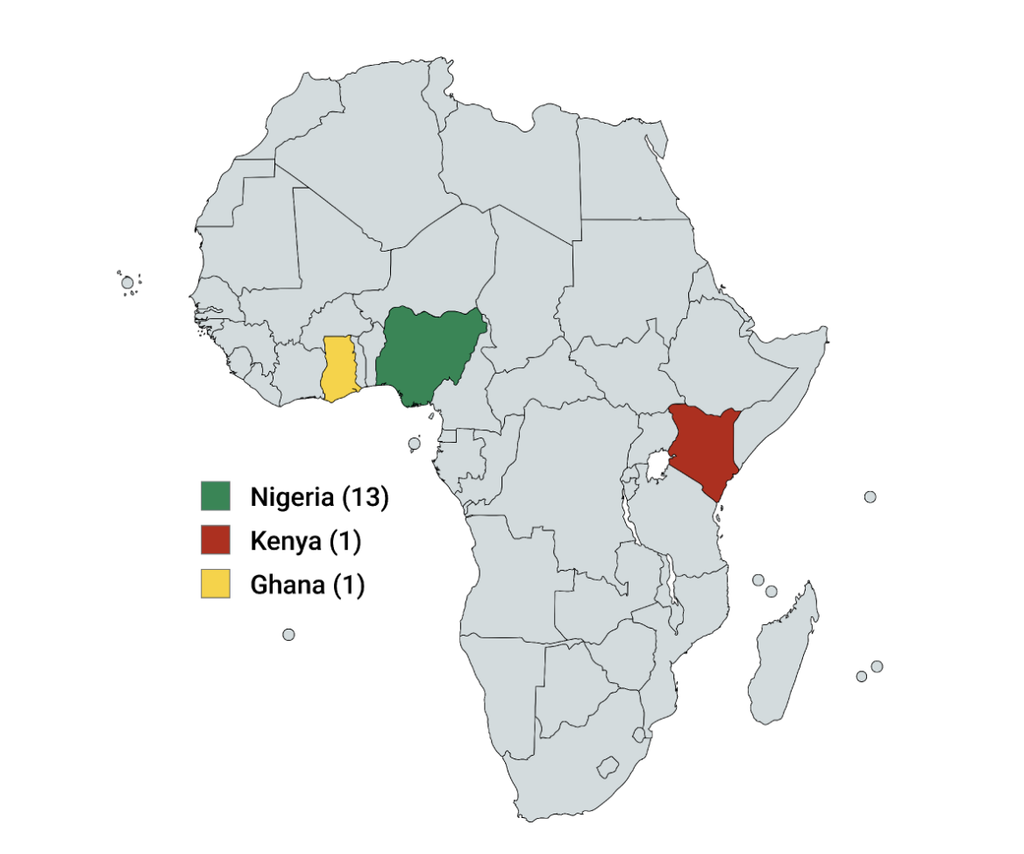
A total of 52 applications were received, of which 41 applicants met the program’s qualification criteria and were admitted. By the end of the program, 15 participants successfully completed all program requirements and graduated, representing learners from Nigeria, Ghana, and Kenya.
The program was designed to:
- Equip participants with practical skills in modern full-stack web development.
- Introduce learners to AI-assisted software development tools and workflows.
- Strengthen participants’ problem-solving and collaborative development skills through project-based learning.
- Prepare participants to build deployable software solutions that address real-world challenges.
The program was delivered over 12 weeks through a blended instructional approach that combined live in-person and virtual instruction, practical coding exercises, individual assignments, collaborative group projects, and periodic assessments. Participants were encouraged to apply their newly acquired skills through continuous practice which culminated in a team-based capstone project.
We received applications from six countries, including Ghana, Kenya, Liberia, Nigeria, South Africa, and Uganda. In the end, 1 student graduated from Ghana, 1 from Kenya, and 13 students from Nigeria.
2025 After-School STEM Clubs for Girls (ASCG) Program Impact Report
Executive Summary
In 2025, the Visiola Foundation’s After-School STEM Clubs for Girls (ASCG) Program trained 3,004 girls, comprising 2,181 unique participants and 823 returning students. This report presents the findings of an academic impact assessment conducted on the program, examining changes in Grade Point Average (GPA) across three academic terms (phases) for a sample size of 498 participating girls. The goal was to evaluate whether sustained participation in the program is associated with measurable improvements in academic performance.
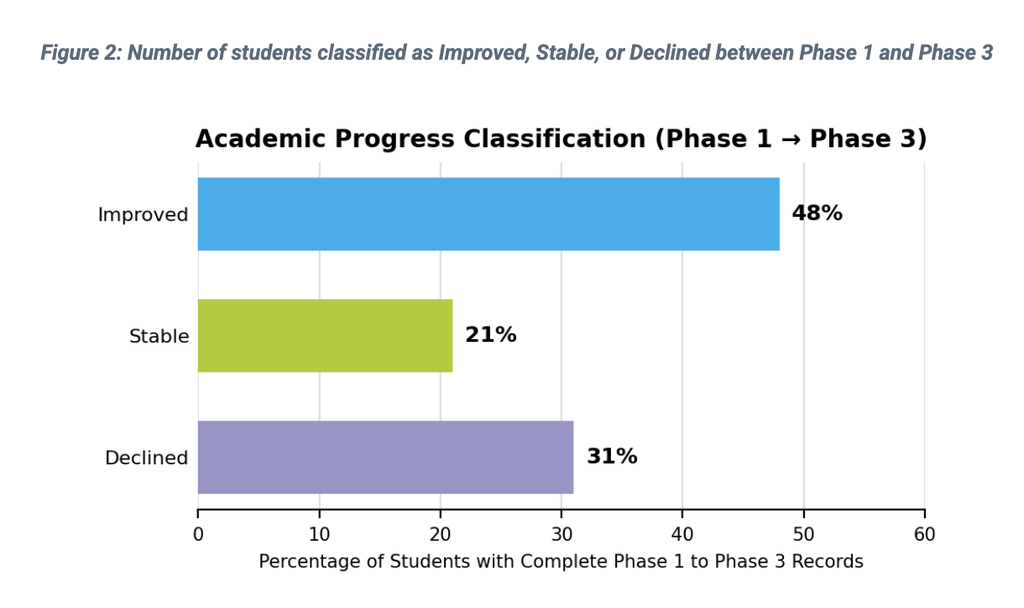
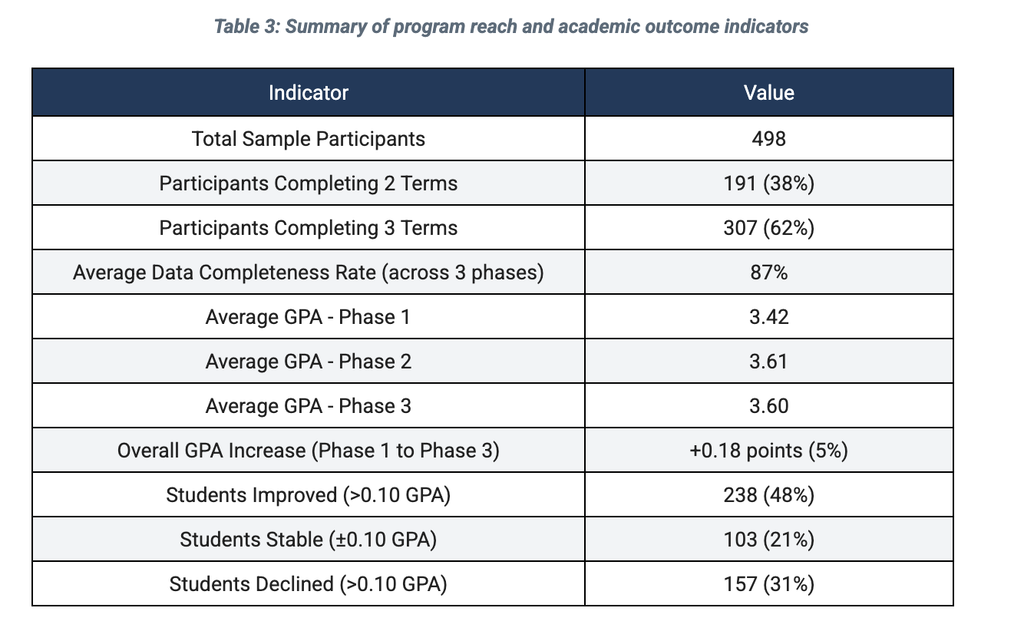
The results point to a net positive relationship between program participation and academic outcomes. Average GPA rose from 3.42 (out of 5.0) in Phase 1 to 3.60 in Phase 3, a gain of 0.18 points, or 5%. Nearly half of participants (48%) recorded a meaningful improvement of more than 0.10 points, while 21% held steady and 31% saw a decline. Notably, the proportion of students scoring in the 4.0–5.0 (“Excellent”) range grew from 117 in Phase 1 to 157 by Phase 3, the largest gain of any performance band.
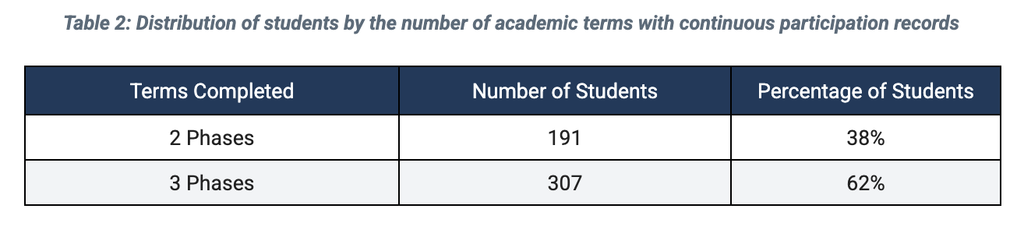
Examining the term-by-term trend adds important distinctions: the strongest gain occurred between Phase 1 and Phase 2 (3.42 to 3.61), after which performance essentially held steady into Phase 3 (3.61 to 3.60). Taken together with the fact that 307 of 498 participants (62%) completed all three terms, this pattern suggests that continued engagement with the program helps sustain academic gains, rather than producing a one-time boost that fades over time.
One data quality consideration worth flagging is that the GPA records were not uniformly available across all three phases. Phase 2 had a completeness rate of 73%, compared to over 93% in Phases 1 and 3. This gap appears to stem from inconsistencies in school-level reporting rather than program attrition, but it does introduce some uncertainty in term-to-term comparisons and is noted here as a priority area for improved data collection going forward.
Taken as a whole, the evidence supports the conclusion that the ASCG is associated with positive academic outcomes for participating girls and that the strength of this association is closely tied to sustained participation. The sections that follow present the supporting data, methodology, and detailed analysis, along with recommendations for strengthening both program delivery and future measurement efforts.
Objectives
This report was undertaken to:
- Assess the academic performance of girls participating in the ASCG program.
- Measure changes in participants’ GPA across the three academic terms covered by the program in 2025.
- Identify patterns of academic improvement, stability, and decline at the student level.
- Evaluate whether continued, multi-term participation in the program is associated with more positive academic outcomes than partial participation.
Data Overview
The dataset comprises academic performance records for a sample size of 498 girls enrolled in the ASCG program. Each student record includes a unique Student ID, the number of academic terms completed, and average GPA for Phase 1, Phase 2, and Phase 3, where available. Not every participant had complete GPA records across all three phases at the time of analysis. Missing values were treated as reflecting incomplete or unavailable school reporting rather than poor academic performance, and were excluded from the relevant comparative calculations.
GPA Record Availability by Phase
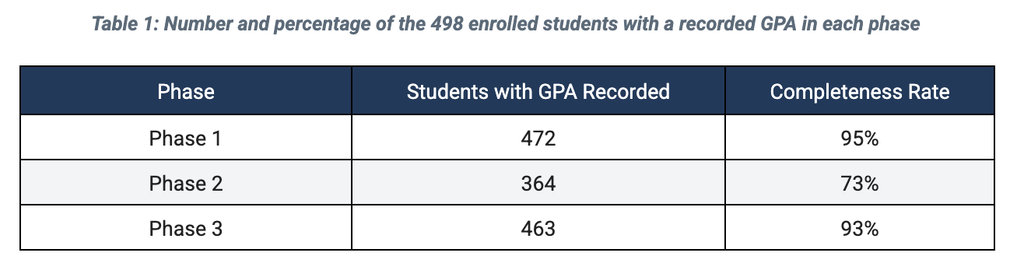
The lower completeness rate in Phase 2 is notable because it occurs in the middle of the program timeline rather than at the end, indicating that the gap is unlikely to be driven solely by students exiting the program early. This is corroborated by the Phase 3 recovery to 93% completeness. As documented by the data provided, the incomplete records stem from gaps in school-level reporting rather than from student withdrawal.
Students by Number of Terms Completed
Methodology
To evaluate program impact, students’ GPAs were compared across the available academic terms using the following approach:
- Student academic performance data was collected from participating schools and retrieved from the Visiola Foundation’s Management Information System (MIS) for analysis.
- Data cleaning and validation were conducted to identify and exclude incomplete or invalid records from term-to-term comparisons.
- Calculation of average GPA for each academic phase, based on all students with a recorded GPA in that phase.
- Pairwise comparison of Phase 1 and Phase 3 GPA for participants with complete records, to classify individual academic progress.
- Classification of academic progress using a practical threshold of ±0.10 GPA points, chosen to filter out minor fluctuations that do not represent meaningful change.
Participants were classified into one of three categories:
- Improved: GPA increased by more than 0.10 GPA points.
- Stable: GPA changed by between -0.10 and +0.10 GPA points.
- Declined: GPA decreased by more than 0.10 GPA points.
This threshold-based approach reduces the influence of small, statistically insignificant GPA fluctuations and provides a more reliable measure of meaningful academic change than a simple raw comparison would allow.
Key Performance Indicators(KPIs)
The following indicators summarise program reach and academic outcomes at a glance.

Overall Academic Performance
Average GPA across the cohort rose from 3.42 in Phase 1 to 3.61 in Phase 2, before declining slightly to 3.60 in Phase 3. Taken over the full program period, this represents a net increase of 0.18 GPA points, or 5%, indicating that participants were, on average, performing at a meaningfully higher academic level by the end of the program than at its start.
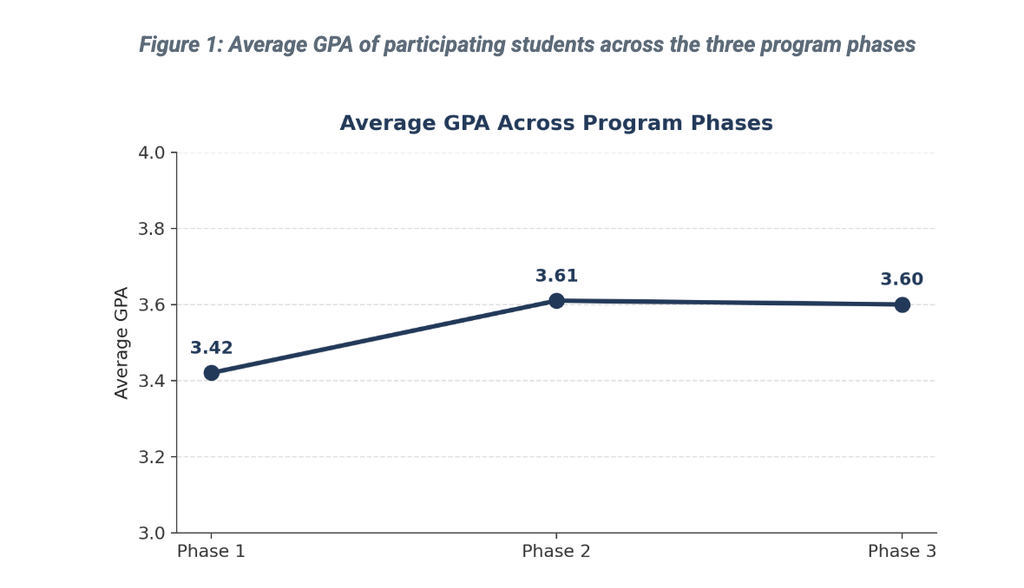
The greatest improvement occurred during the first half of the program (Phase 1 to Phase 2), while performance remained largely stable in the second half (Phase 2 to Phase 3). The slight decline of 0.01 falls within the ±0.10 stability threshold and does not indicate meaningful regression. Instead, it suggests that the gains achieved by Phase 2 were successfully maintained through Phase 3. While this reflects strong program sustainability, the finding should be interpreted alongside the lower Phase 2 data completeness rate, as the smaller and potentially non-representative sample may have slightly influenced the observed mid-program improvement.
Student-Level Analysis
Classifying students individually by the change in their GPA between Phase 1 and Phase 3, using the ±0.10 threshold, provides a more detailed understanding than the average trend alone. Of the 498 participants, 238 (48%) improved meaningfully, 103 (21%) remained stable, and 157 (31%) declined. Some of the reasons for declining academic performance include the absence of teachers for sustained periods in some schools and other factors beyond the students’ control.
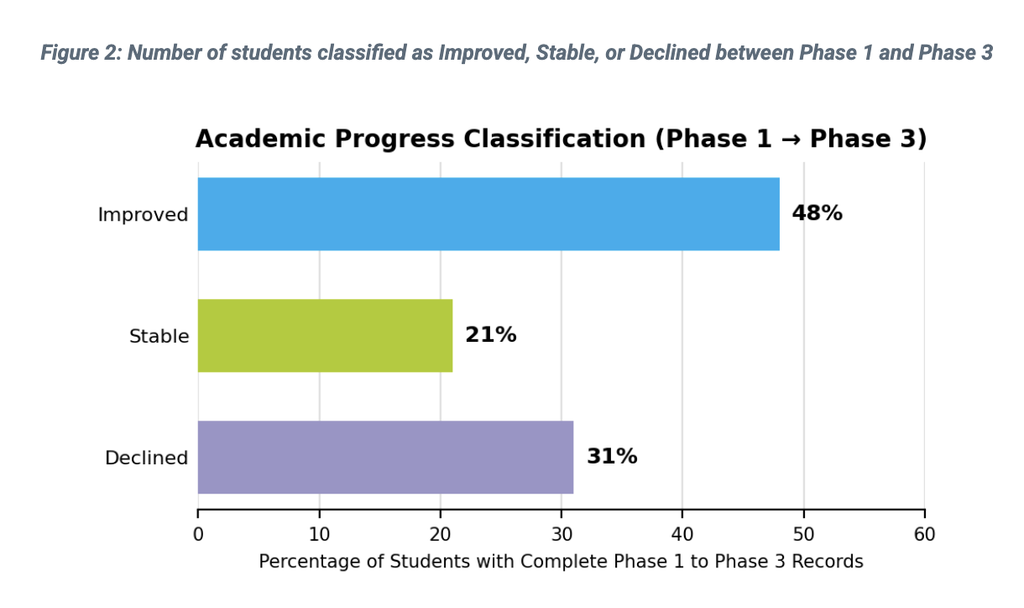
Nearly half of participants (48%) showed measurable improvement, compared with almost one-third who declined. This aligns with the overall increase in average GPA, indicating that improvements among higher-performing students outweighed declines among others. However, a 31% decline rate remains significant and suggests that a substantial minority of participants may require additional academic or program support. It also highlights that overall averages can mask important differences in individual student outcomes.
Trend Analysis
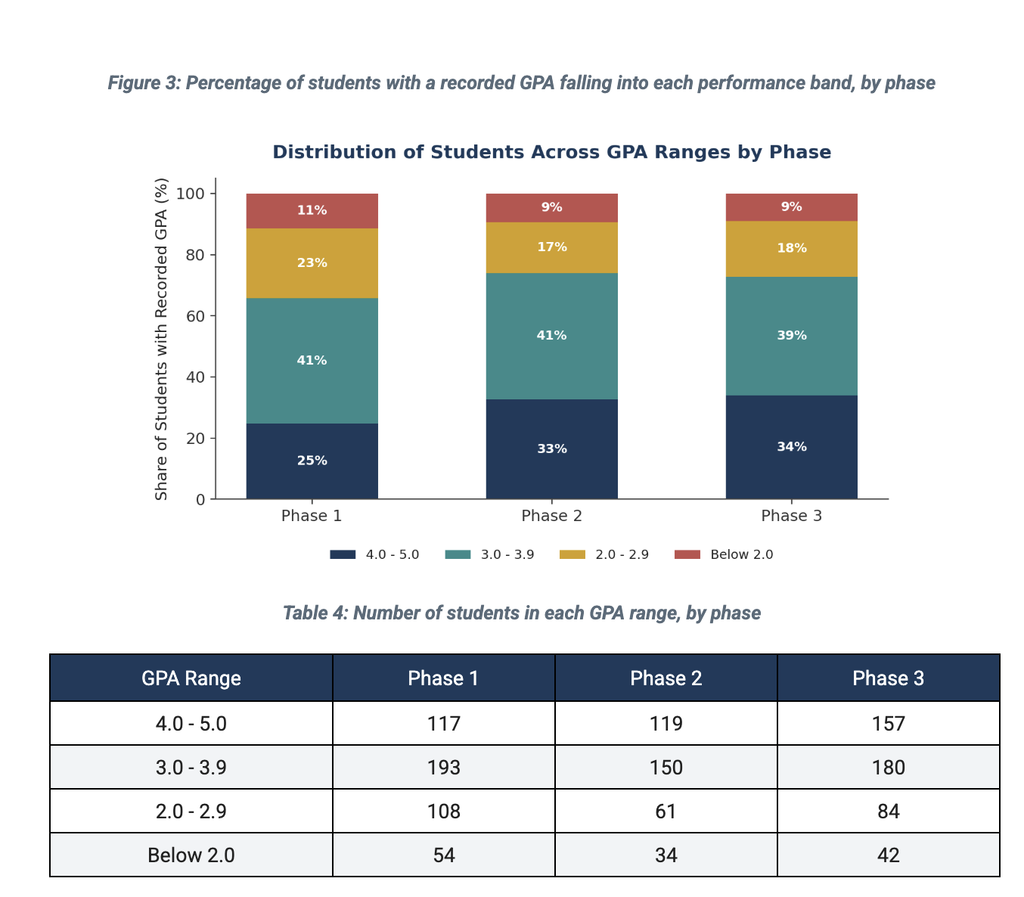
The most notable change was in the highest performance band (GPA ≥4.0), which grew from 117 students in Phase 1 to 157 in Phase 3, a 34% increase and which was the only category to show consistent growth throughout the program. Meanwhile, the number of students with GPAs below 2.0 fell from 54 to 42, after dropping to 34 in Phase 2. Together, these shifts suggest that the modest increase in average GPA shows a more meaningful trend: more students moved into higher performance categories over the course of the program.
Performance Category Analysis
Categorizing each student’s overall GPA into standard performance bands gives a snapshot of where the program stands as a whole. Of the 498 participants, 177 (35%) fall into the Excellent category, 209 (42%) into Good, 73 (15%) into Fair, and 39 (8%) into Poor.
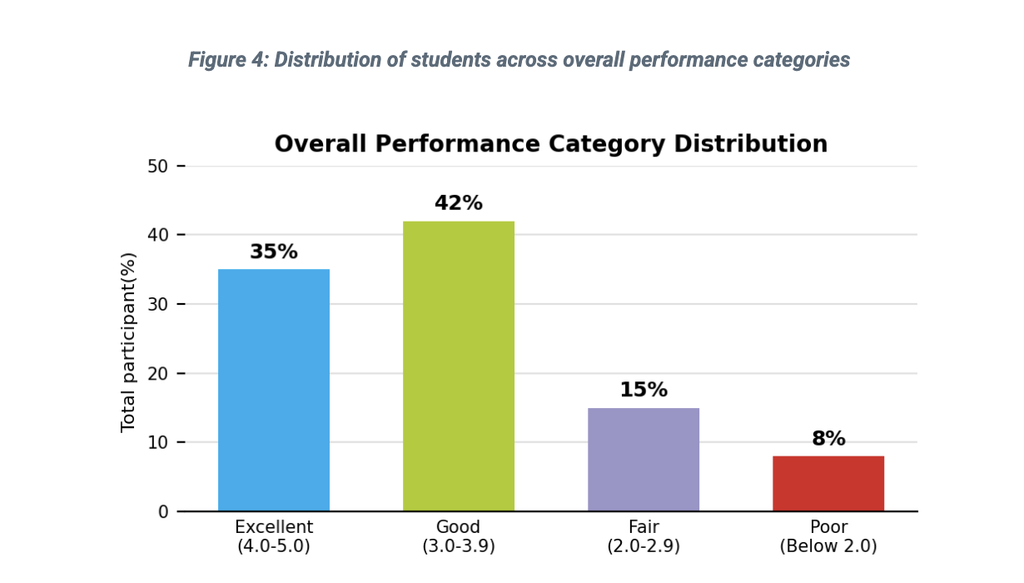
Combined, 77% of participating girls (386 of 498) are classified in the Good-to-Excellent range, indicating that the majority of participants are performing well academically. The remaining 23% in the Fair and Poor categories represent a smaller but still significant group of students for whom the program may need to consider more targeted support or mentoring interventions to close the performance gap.
Key Findings
- Net positive academic impact: Average GPA increased by 0.18 points (5%) from Phase 1 to Phase 3, indicating a positive overall association between program participation and academic performance.
- Upward migration into higher performance bands: The number of students in the top GPA band (4.0 – 5.0) grew by roughly 34% from Phase 1 to Phase 3, the strongest and most consistent gain of any performance band.
- Gains were sustained, not just achieved: Gains achieved between Phase 1 and Phase 2 were largely maintained rather than lost by Phase 3, suggesting the program’s benefits are not short-lived.
- Nearly seven in ten students improved or held steady: 48% of students improved meaningfully, and 21% remained stable, together accounting for 69% of participants who did not decline.
- A significant minority of students declined: 31% of students declined by more than 0.10 GPA points, a meaningful minority that indicates the program’s benefits are not yet uniform across all participants.
- Data completeness is uneven across phases: GPA record completeness dropped to 73% in Phase 2 due to school-level reporting gaps, introducing some uncertainty in the data collection.
Recommendations
- Strengthen data collection consistency: Work with participating schools to establish a consistent GPA reporting schedule and data submission checkpoints for each academic phase.
- Adopt the STEM-Career Interest Survey (CIS) pre/post self-efficacy score as a complementary impact metric. While GPA reflects academic performance, it does not capture participants’ confidence to pursue STEM. The STEM-CIS is a validated tool that measures students’ self-efficacy, their belief in their ability to succeed in STEM. Administering it before and after each program phase would provide a direct measure of the program’s impact, as self-efficacy is a strong predictor of girls’ continued engagement in STEM. Tracking STEM-CIS results alongside GPA would strengthen the program’s evidence of impact.
Conclusion
Overall, the assessment shows that participation in the ASCG program is associated with a positive improvement in academic performance. This is reflected in the increase in average GPA and the growing proportion of students achieving the highest GPA band. These gains were most evident among the 62% of participants who completed all three phases, highlighting the importance of sustained participation for both student outcomes and reliable impact measurement.
However, the findings also reveal opportunities for improvement. A significant proportion of students experienced declining performance, and inconsistencies in data completeness affected the analysis across phases. Strengthening targeted support and improving the consistency of data collection will enhance both the program’s impact on participants and the quality of evidence available to demonstrate its effectiveness.